G.A.S. Foundation is pleased to welcome Moses Hamborg, a Los Angeles-based painter and recipient of the G.A.S. Fellowship Award 2026, for an eight-week at the G.A.S. Farm House in Ikiṣẹ. Working at the intersection of figurative painting and material research, Moses’ practice explores how identity, environment, and perception are shaped through both image-making and the substances that constitute it. His recent work extends beyond representation into an inquiry into pigment itself, positioning material as both medium and subject.
During his residency, Moses will undertake a sustained investigation into earth pigments, with a particular focus on kaolin. His approach combines field research, material collection, and studio experimentation. In the early stages of the residency, he will engage with local communities, including miners, vendors, artisans, and cultural practitioners, to understand the ecological, cultural, and economic contexts surrounding the extraction and use of kaolin and other local raw materials. These encounters will inform a broader mapping of the material’s pathways, from source to application. This fieldwork will transition into a period of studio-based experimentation, in which Moses will process the collected pigments and test their properties across a range of binders, surfaces, and techniques. Through this process, he aims to build a working material archive, documenting variations in texture, opacity, adhesion, and colour stability. The final phase of the residency will see the development of a new body of paintings that respond to the relationships between landscape, material origin, and identity.
Moses Hamborg's residency is generously supported by the Terra Foundation for American Art. To find out more about supporting G.A.S. Foundation, click here.
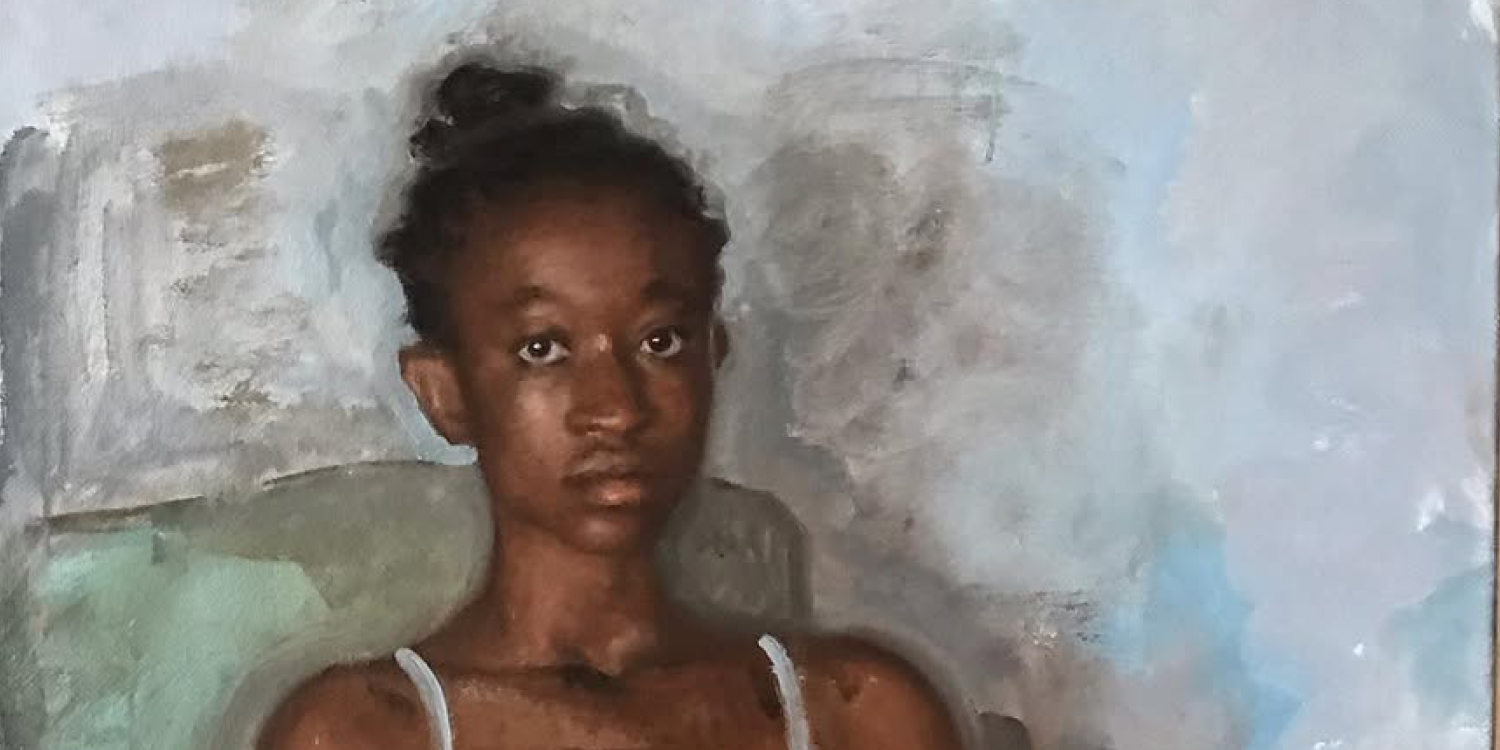 Kumba, oil on canvas. Image courtesy of the artist.
What is the current focus of your creative practice?
I’ve been exploring themes of identity, performance, and transcendence through sourcing and creating costumes, alongside developing oil paintings of figures and still lives. My work often considers how the body moves through physical and emotional landscapes. I recently completed a residency and exhibition in Abidjan, where I examined the experience of love through movement, creating portraits of individuals in different modes of transportation. I was interested in asking questions about care and the different forms, infrastructures, and relationships through which we experience it. This project deepened my interest in how environment, gesture, and embodiment intersect within figurative painting.
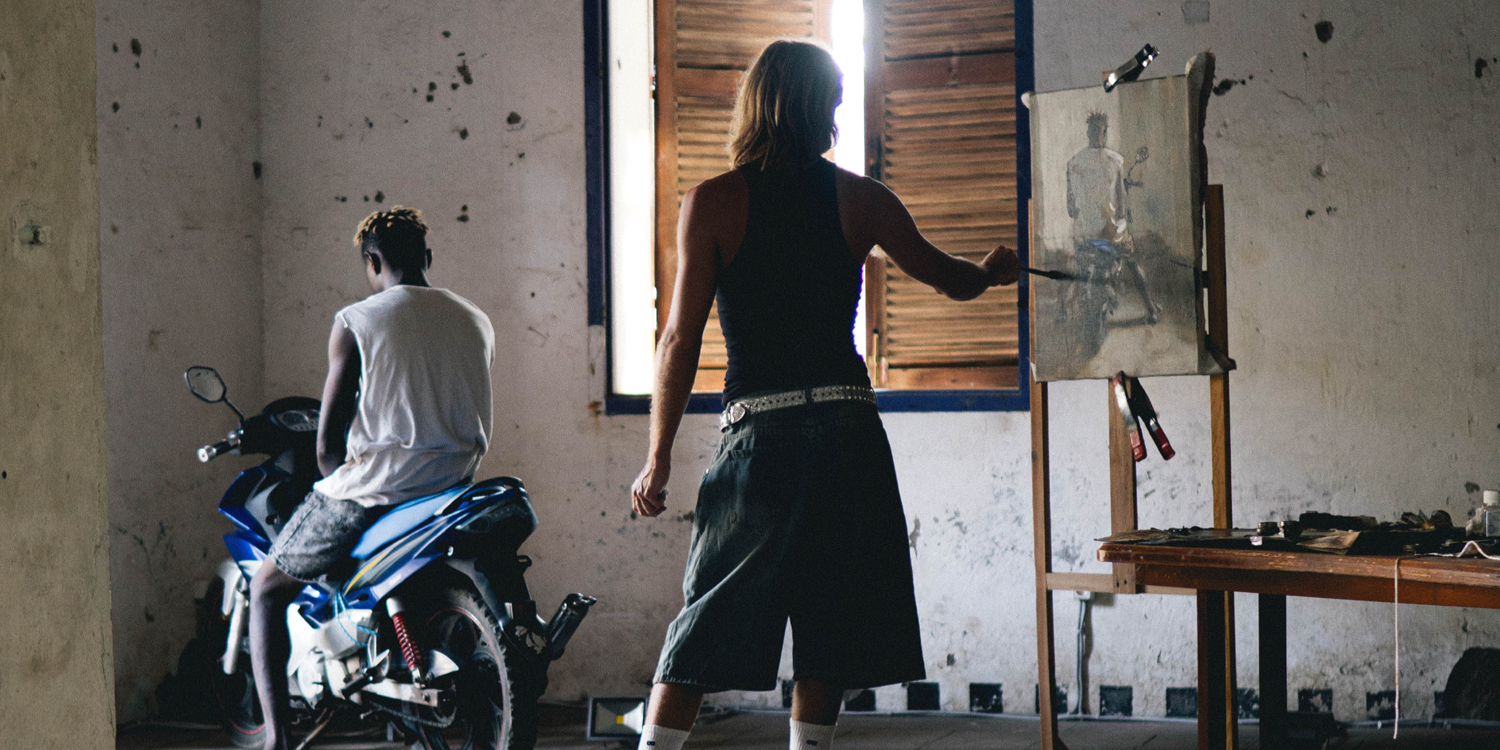 Moses Hamborg at work in his studio during a live painting session. Photo: Philippe-Alexandre Aka-Adjo.
What drew you to apply for this residency and how do you think it will inform your wider practice?
I am drawn to this residency as an opportunity to deepen my engagement with materiality within a specific cultural and geographic context. The support and framework offered by G.A.S. Foundation provide a meaningful environment for research-driven work. I hope to expand my practice by investigating the origins and processes behind the materials I use, especially natural pigments like kaolin and oil palm fruit fibers. Building on my classical training, I am increasingly interested in sourcing, processing, and transforming raw materials as a way to enrich both the visual language and conceptual framework of my work. This approach opens new possibilities for thinking about painting as a material and poetic act shaped by place, exchange, and transformation.
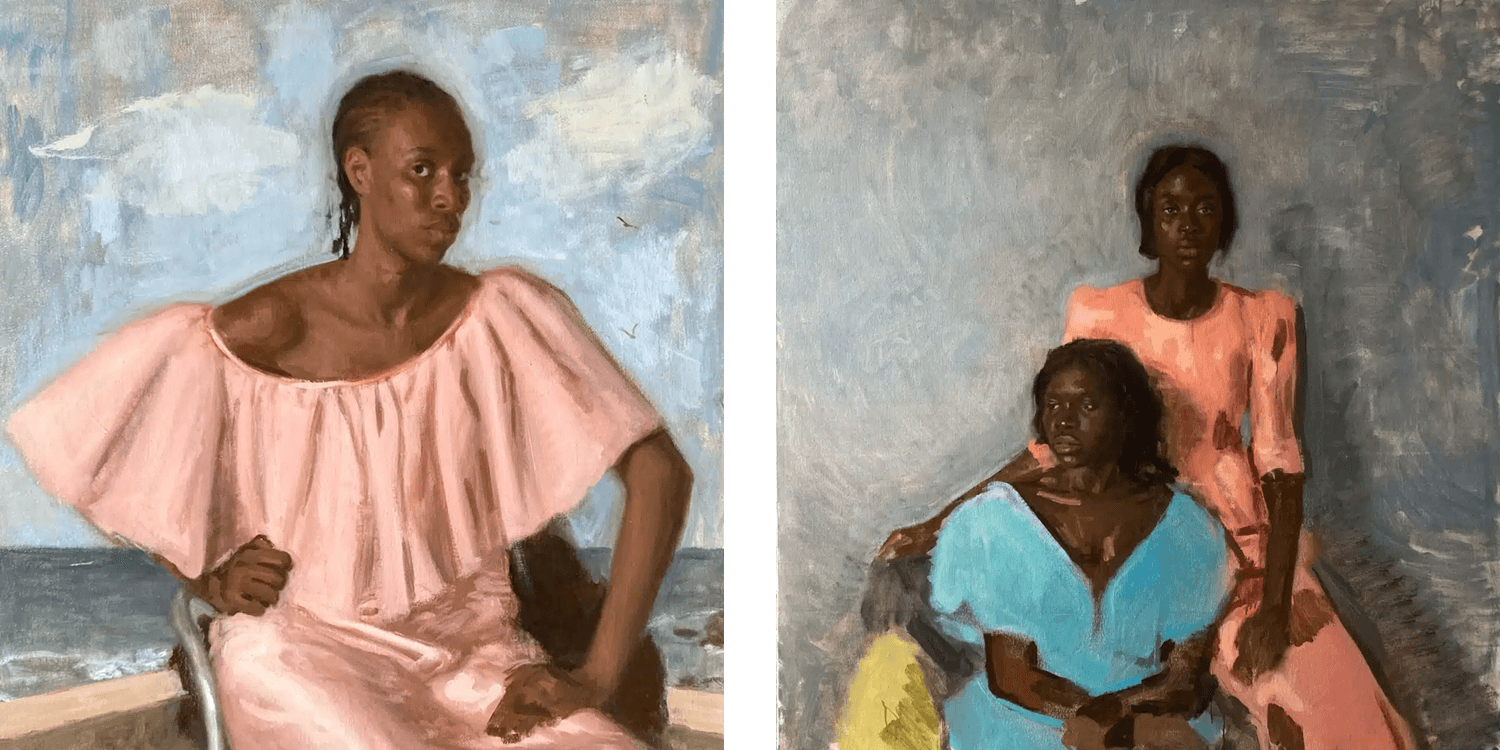 (L) Assiatou, Oil on jute, 90 x 120 cm, 2021, (R) Mariam & Moumi, Oil on jute, 140 x 180 cm, 2021. Image courtesy of The Florence Academy of Art.
Can you give us an insight into how you hope to use the opportunity?
I plan to use this residency to broaden my use of materials and deepen my understanding of how they shape my craft. Working directly with locally sourced pigments, I hope to develop a more intimate awareness of the physical and cultural dimensions of painting. I am especially interested in tracing the pathways materials travel, from extraction to preparation to transformation, and the histories, relationships, and forms of knowledge they carry. Engaging with the sourcing and processing of pigments will open space for experimentation that is both technical and conceptual. These encounters will allow painting to become a site where material, cultural, and personal narratives meet. Through this process, I hope to better understand how identity is shaped not only through representation, but also through the tactile and chemical life of materials, alongside the inherited practices embedded in their use. Working closely with these processes opens new ways of thinking about painting as an ongoing exchange, where transformation is shared between landscape, material, and artist.
RESIDENCY ARCHIVE
Event: Making With The Land
Event Date: 1st July 2026
As part of their ongoing residency, Kim M. Reynolds and Moses Hamborg hosted Making With The Land on 1st July 2026, bringing together students from St. John's Primary School, Ikiṣẹ, for a hands-on workshop combining storytelling, bookmaking, and experimental printmaking.
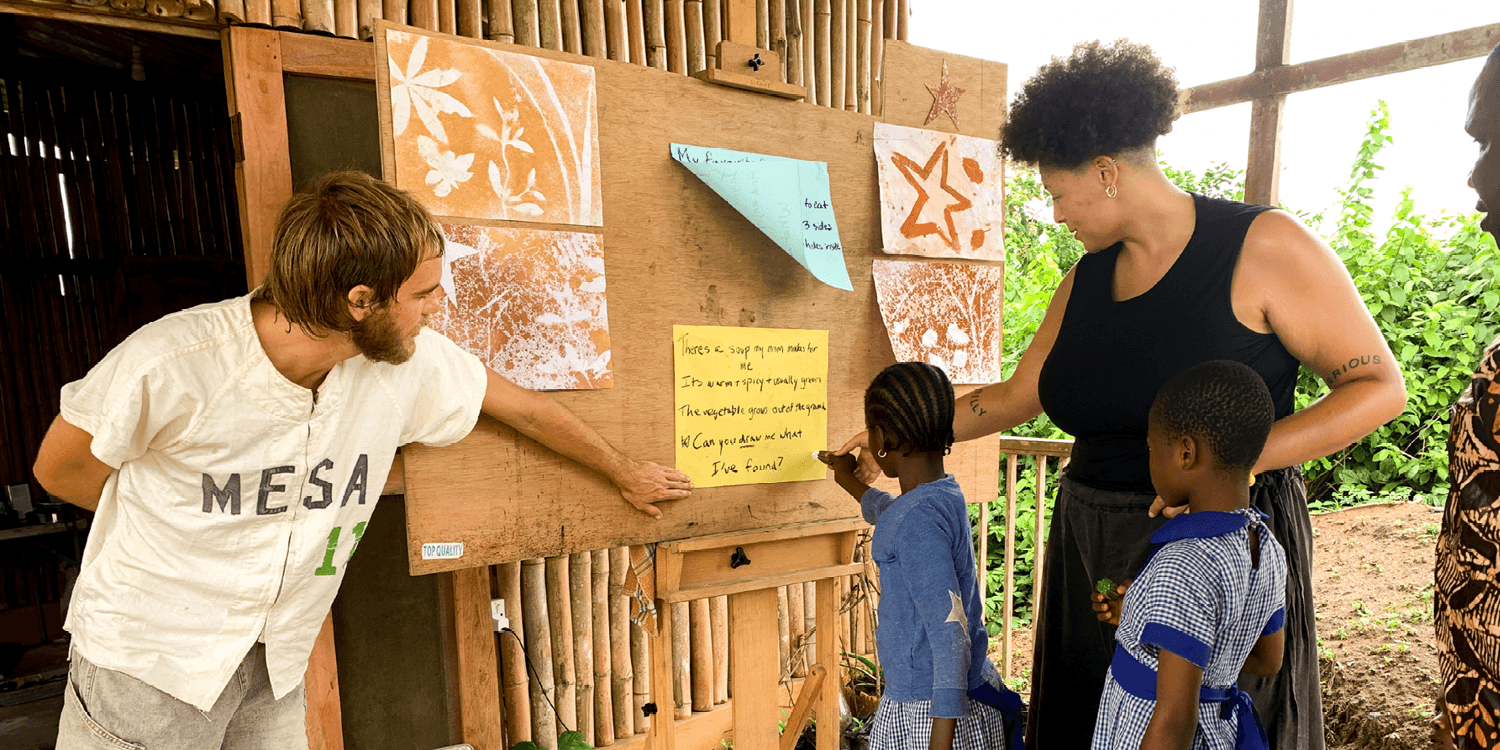 Moses Hamborg and Kim M. Reynolds guiding children from St. John’s Primary School during a bookmaking workshop.
Event: im/MATERIAL
Event Date: 8th July 2026
On 8th July 2026, G.A.S. Lagos hosted im/MATERIAL, an intimate presentation and conversation in which Moses Hamborg shared the material explorations developed during his residency at the G.A.S. Farm House in Ikiṣẹ. Throughout the evening, Moses guided visitors in small groups explaining the works, retracing the journey behind each material and the experiments that shaped them.
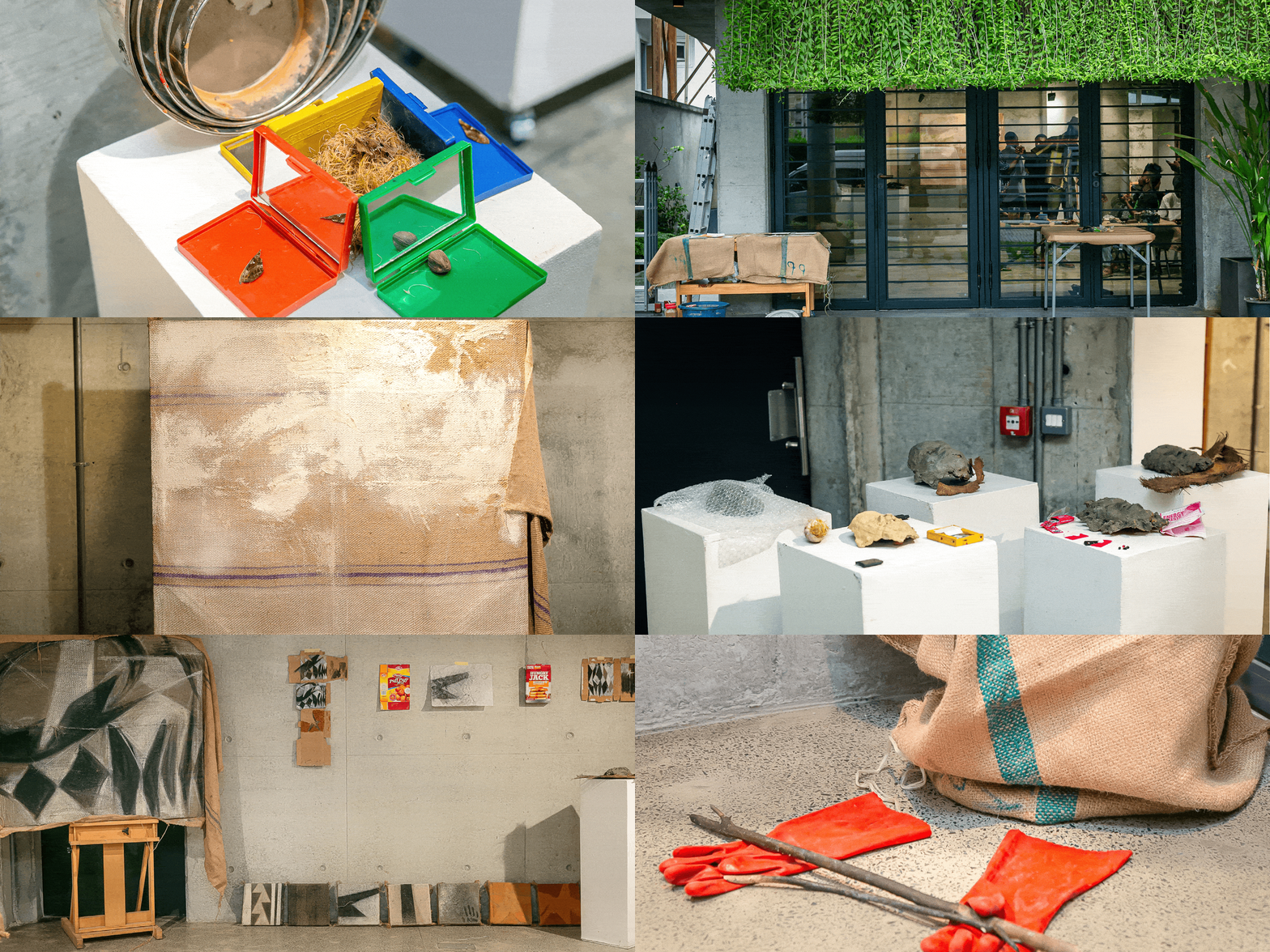 Installation images of works developed by Moses Hamborg during his residency at the G.A.S. Farm House in Ikiṣẹ.
About Moses Hamborg
Moses Hamborg is a figurative painter whose work explores identity, movement, and perception through the lens of classical painting traditions. Trained at the Florence Academy of Art and Charles H. Cecil Studios, his practice is grounded in observational drawing and oil painting while increasingly integrating material research into pigment and process. His work has been exhibited internationally, including in the BP Portrait Award at the National Portrait Gallery in London and the 14th Dak’Art Biennale. Hamborg has participated in artist residencies such as Kehinde Wiley’s Black Rock Senegal and Pearl Lam’s 70 Square Metres in Shanghai, where he presented Taxon.
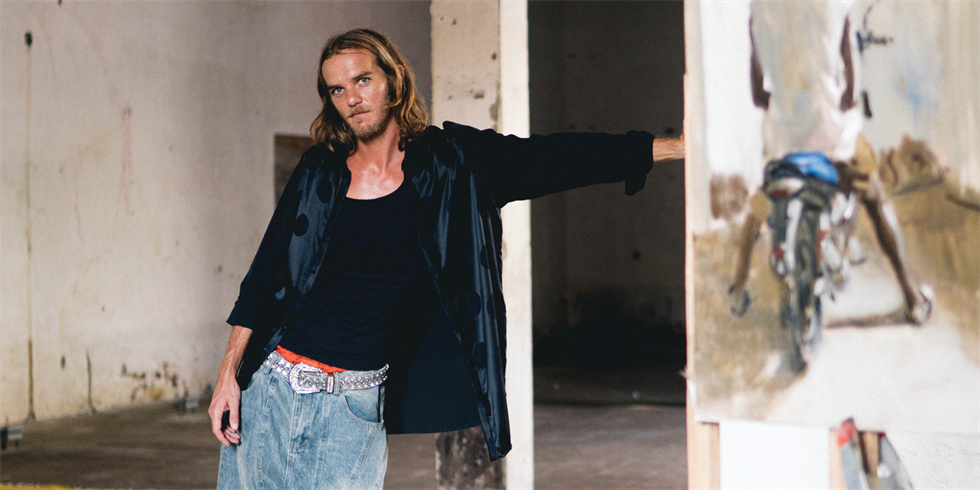 Image of Moses Hamborg. Photo: Philippe-Alexandre Aka-Adjo.
Moses' residency is generously supported by the Terra Foundation for American Art.
