Guest Artists Space Foundation (G.A.S.) and Yinka Shonibare Foundation (Y.S.F.) announce a partnership with London-based ceramic artist Isis Dove-Edwin to establish a ceramics development initiative at the G.A.S. Farm House in Ikise. The initiative includes a permanent ceramics studio with a potter's wheel and a gas kiln, specialist technical support for kiln firing, and an eight-week, fully funded residency for a Nigerian ceramicist.
Through this partnership, the foundations aim to lay the groundwork for a long-term ceramics strand within G.A.S.'s residency and public programming, building local capacity, supporting artistic experimentation and strengthening ceramic practice in Nigeria. The new facility will widen the range of practices that can be meaningfully supported on site, giving artists the chance to test new methods, materials and forms of making in relation to place. The project honours the legacy of Isis's late father, George Dove-Edwin, a collector and patron of Nigerian art, craft and literature. It also responds to the need for more accessible residencies for ceramic artists living and working in Nigeria, removing the barriers associated with international travel.
We interviewed Isis about her route into ceramics, why access to facilities matters, and what she hopes this partnership will mean for artists in Nigeria.
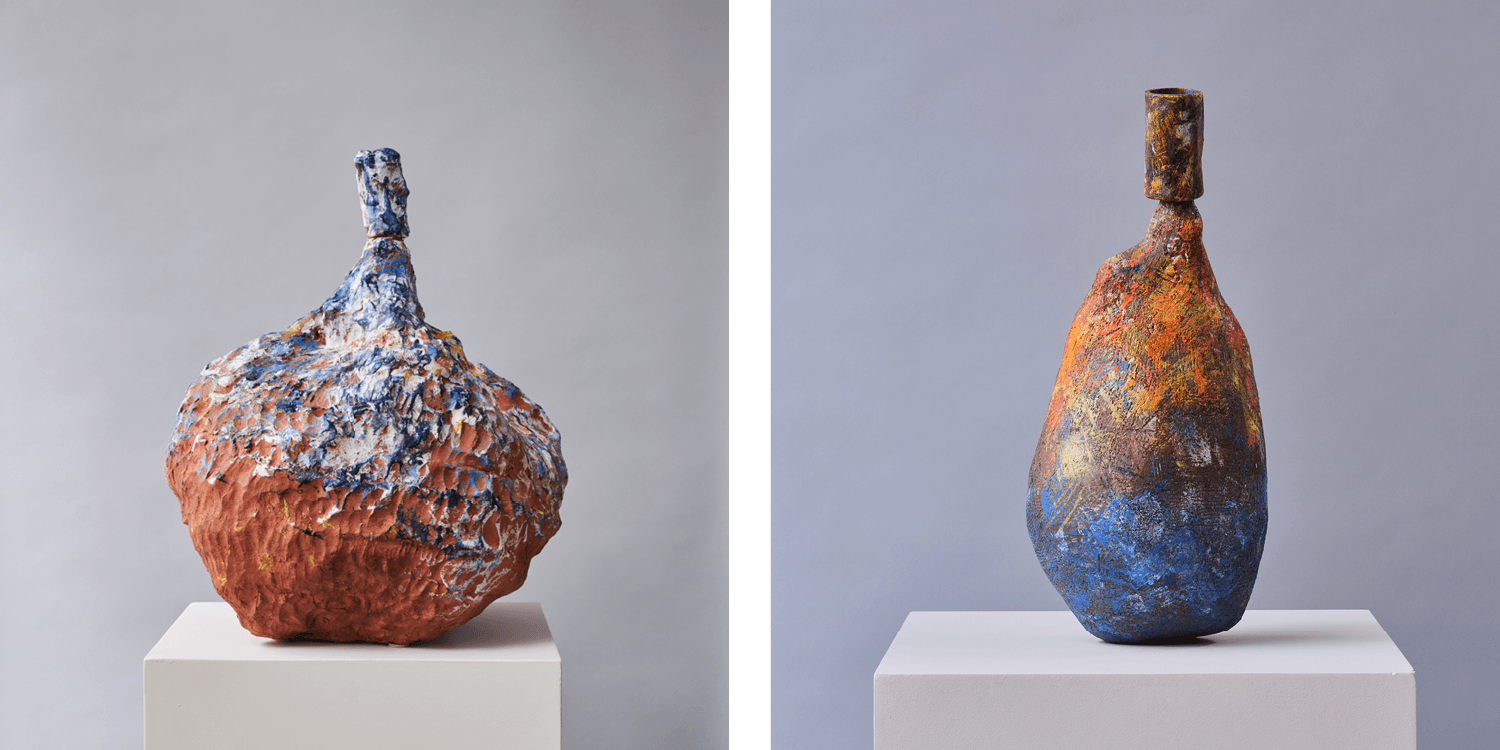 (L) Drift, 2024. (R) Beads and Other Adornments, 2026. Images courtesy of the artist.
Q: Every artist's journey is unique, and yours has taken an unexpected route. What led you to ceramics, and how has your practice developed?
My path to a career as an artist has not been linear. As a medical student, I saw a poster advertising pottery evening classes, signed up, and was hooked. After my initial enthusiasm though, I discovered that life as a hospital doctor held no time for clay. I picked it up many years later when I took a career break to look after my young children. I cherished the few hours a week at a local class, getting lost in the process of making. As I began preparing to go back to work in 2018, I realised that I wanted a bit more time with clay, and in a clandestine moment that lay somewhere between madness and rebellion, I decided to study ceramics at Central Saint Martins, and then went on to do an MA in Ceramics & Glass at the Royal College of Art. When I graduated in 2023, I felt totally committed to clay, and there was just no turning back.
During my BA, I discovered archaeological accounts of pottery made by enslaved African women on plantations which were objects of agency, power and resistance. This became a starting point from which to explore the movement of skills, objects and people across the Black African diaspora through making.
Q: What have you come to value most about working with clay, and why does access to facilities and technical support matter for ceramic artists?
I am fascinated by its ability to express different ideas through its material essence, processes of making and the form of objects created. I am also deeply interested in its documentary power. Ceramics can hold stories and carry them across time, from the present far into the future as archaeological finds. Objects such as Nok sculptures, Greek vases or ancient tablets have given us knowledge and insight into ancient cultures. Because ceramic is so durable, in the future it may hold more clues to our contemporary life than what we store digitally in the cloud.
Access to facilities and technicians is essential to support the translation of ideas into tangible objects. Facilities can mean both creative space and equipment: high temperature firing, which transforms clay into its stable form, ceramic, requires a kiln. Lack of access to space and equipment can stunt potential, limit opportunity and curb ambition. Technicians, many of whom are artists in their own right, can support artists through their wealth of experience in making, deep understanding of the material and kiln-firing know-how.
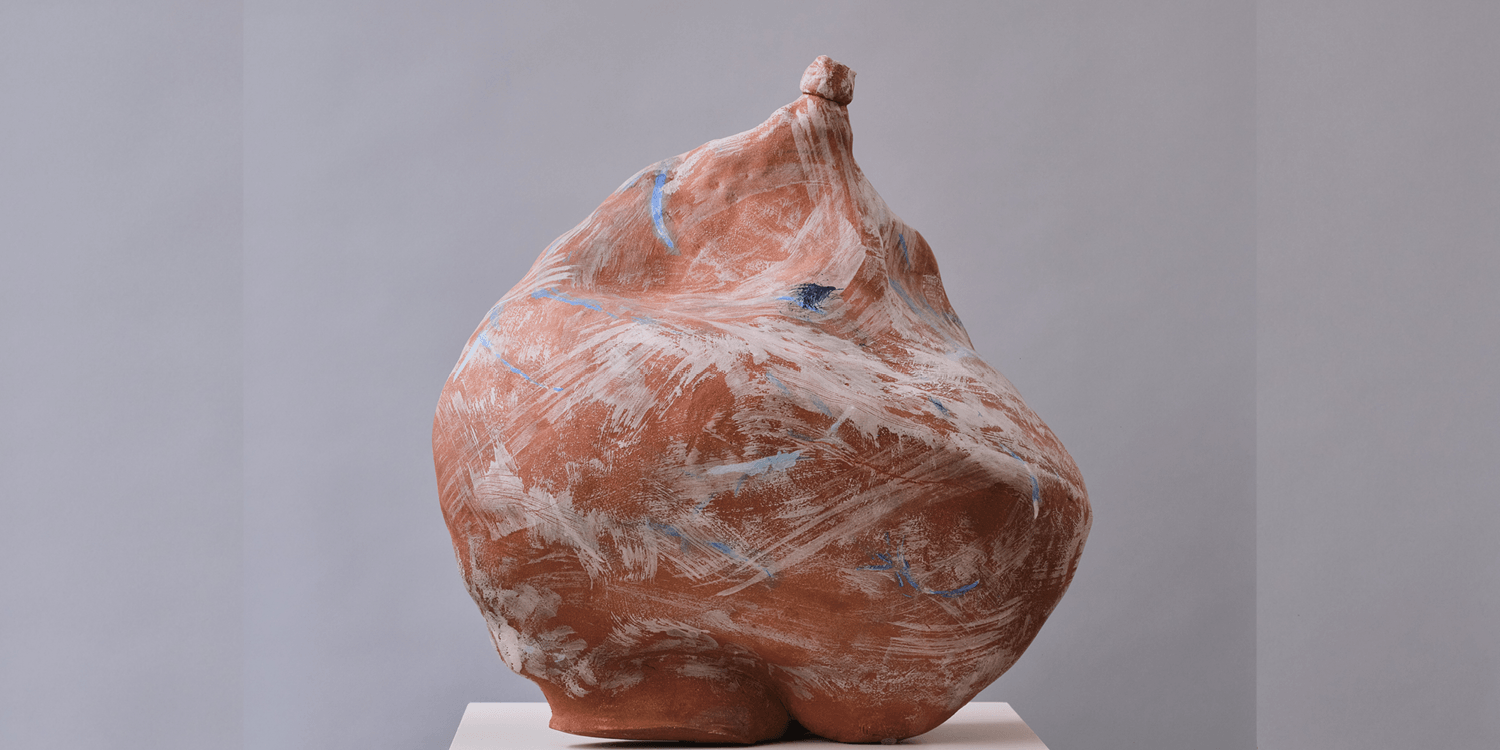 Market Saturdays, Church Sundays, 2025. Image courtesy of the artist.
Q: You are supporting the creation of a permanent ceramics facility at the G.A.S. Farm House, alongside its inaugural residency. What drew you to this opportunity?
Two things came together. I had been thinking of ways to honour the legacy of my late father, George Dove-Edwin, a collector, patron and promoter of Nigerian art, craft and literature, both at home and internationally as a diplomat. Then last year, while I was doing a residency in Jingdezhen, China, a Nigerian ceramic artist happened to be discussing how difficult it was for many Nigerian artists to access international residencies. Barriers included costs, from the initial cost of the application to flights, materials and accommodation if the opportunity was not fully funded, as few of them are. In addition, there could be difficulties obtaining visas.
So this project honours my father's legacy, and through the existing (and exceptional) international residency infrastructure and resources at G.A.S., Nigeria-based ceramic artists will be able to access a high-quality fully funded residency without the prohibitive costs and barriers to travel abroad.
Q: How do you think the Farm House's rural setting, with its focus on agriculture and ecology, might influence the work produced there?
The expansive space and quiet of the rural setting will undoubtedly allow artists to be reflective and immerse themselves fully in their project. I see the Farm House's focus on agriculture and ecology as offering a rich context for artistic enquiry, with points of inspiration or investigation presented through observation and direct engagement with the landscape and processes, or more broadly through its conceptual associations.
 Tomato crops growing in greenhouses at the Ecology Green Farm, Ikise. Photographer: Olanrewaju Ali.
Q: What possibilities do you hope the new kiln and residency will create for artists in Nigeria, and what does it mean to support something you hope will last for many years?
The kiln and residency are just one part of the overall G.A.S. vision, and I see them as a step towards embedding the rich heritage and contemporary practices of Nigerian clay workers into the fold. Residencies provide an immersive, time-bound opportunity to focus on artistic practice away from regular distractions. That experience will be enriched by exchange with, and sharing the resource with, the established ceramic craft community locally. With continued support, there are huge possibilities for an accessible space for knowledge exchange, workshops, critical discourse and continued inspiration for new and emerging ceramic artists. I feel very fortunate to have benefited from lasting legacies myself, through easy access to artworks in institutions, awards, bursaries and a funded residency, as well as more intangible legacies such as education and open ways of thinking. So this feels like a natural next step. I'm very excited to support it, and I really hope it benefits artists for many years to come.
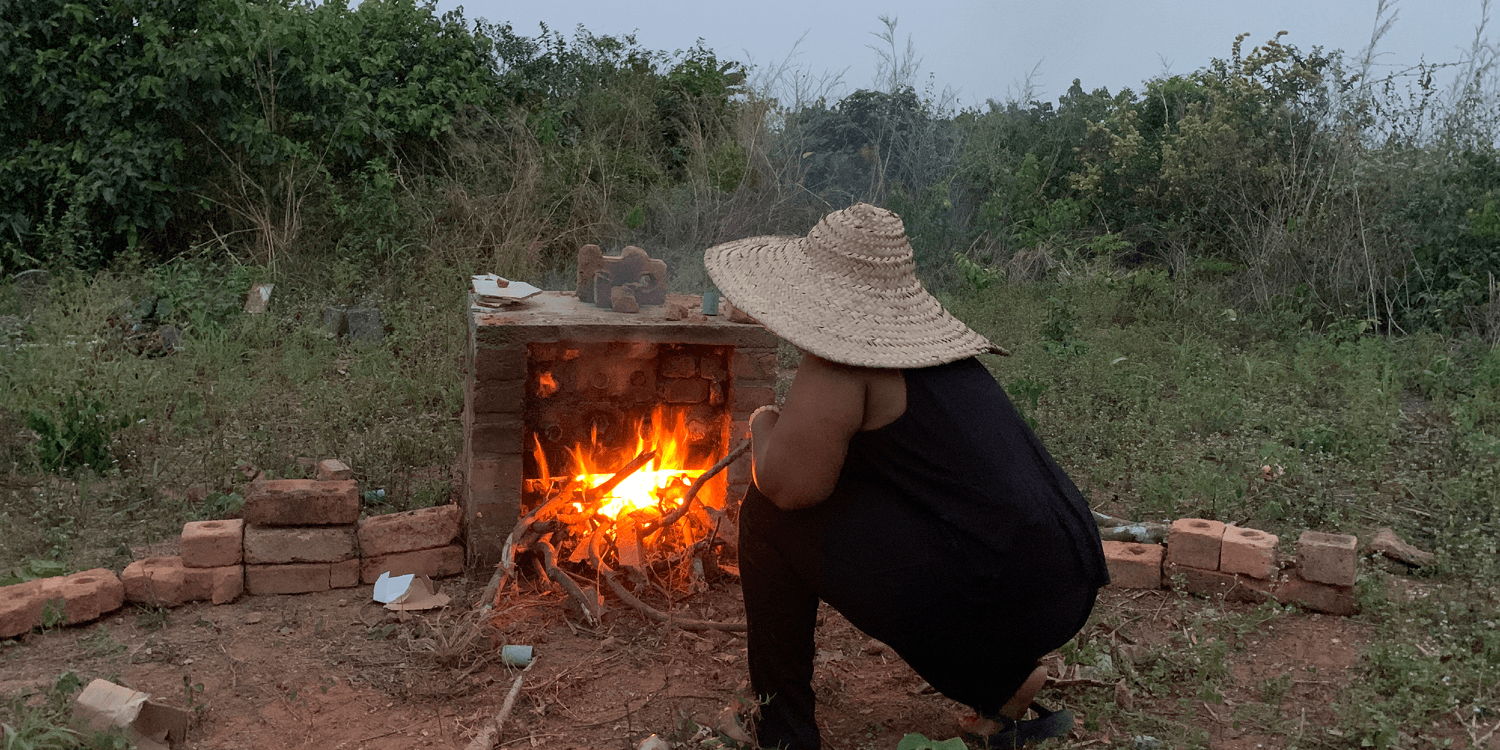 Alumna Fiyin Tunde-Onadele firing work with temporary kiln at the G.A.S. Farm House in Ikise.
About Isis Dove-Edwin
Isis Dove-Edwin is drawn to the ceramic language of materiality, process, and form. Inspired by domestic hand-built, low-fired terracotta pottery from West Africa where her roots lie, she draws on craft and historical narratives and an interest in diasporic stories of objects, skills, and people. Grounded in research, she creates sculptural vessels as a means of storytelling. Each piece is unique. Vessels are made expressively, with dynamic surfaces activated by retained visible marks of making and colour. Isis is based in London and holds a BA (Hons) in Ceramic Design from Central St. Martins (2021), and an MA in Ceramics & Glass from the Royal College of Art (2023). Her work has been exhibited in London, Milan and China, and is in private collections in the UK, Dubai, France, and Ghana. She works collaboratively as part of 2nd Shift with artist Leonora Lockhart, building community and responding to the impact of being an artist-mother.
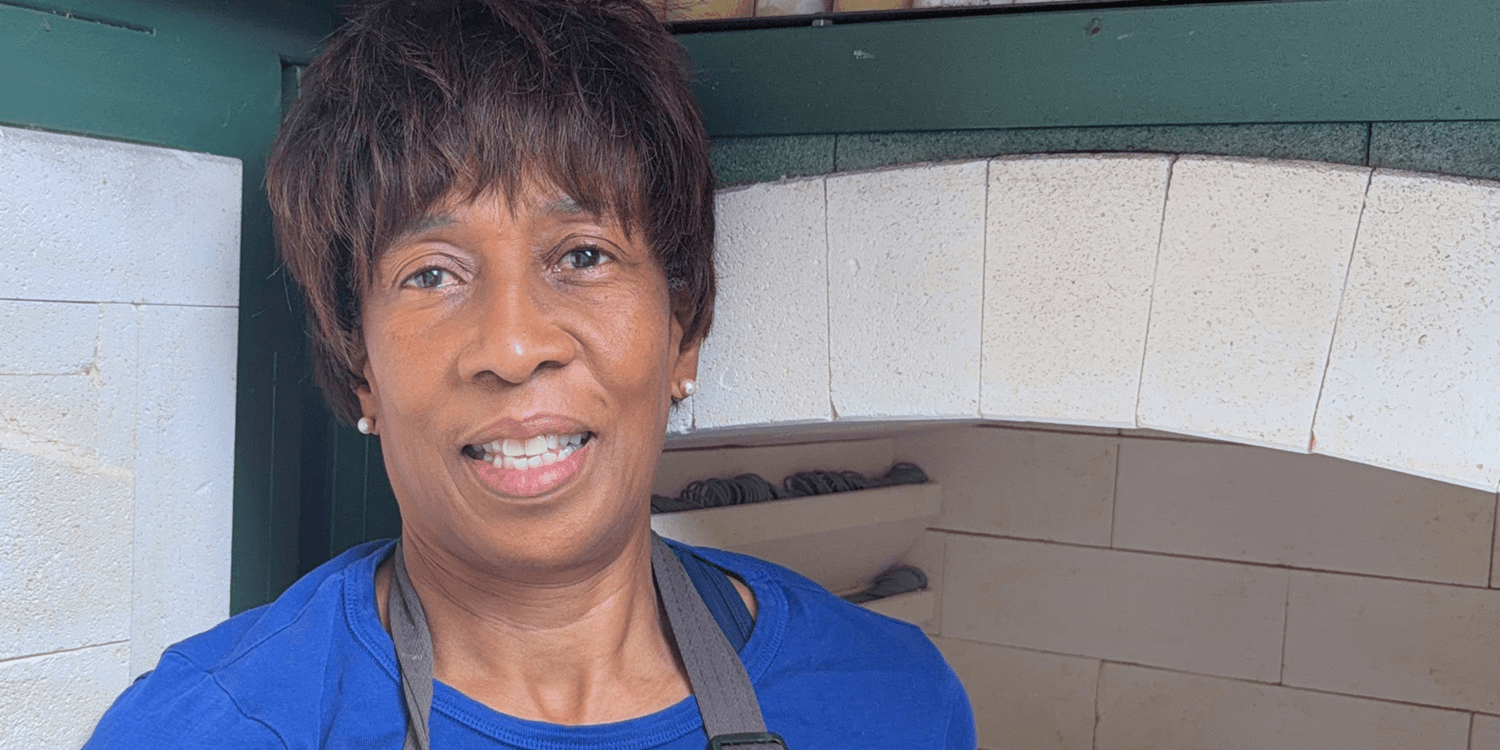 Photo of Isis Dove-Edwin. Image courtesy of the artist.
For press enquiries please contact catherine@guestartistsspace.com